Reporting Systems Integration for Drilling Operations
Connect reporting platforms and make operational data searchable, consistent, and ready for analysis
From Reports to Searchable Operating Knowledge
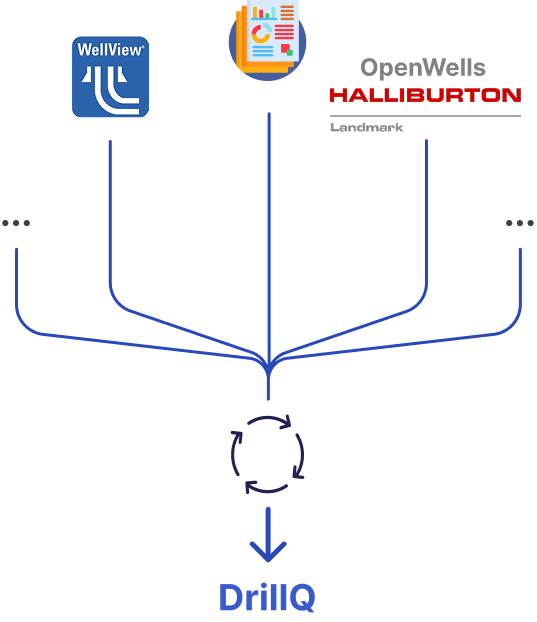
DrillQ connects existing reporting systems and transforms recurring operational reports into standardized drilling data. Teams can preserve their current reporting workflows while making the information easier to search, compare, validate, and reuse across wells. Instead of reports staying locked inside separate platforms, DrillQ turns them into connected operational context.
Challenges with Drilling Reporting Systems
Reporting platforms are essential, but disconnected report stores make it harder for teams to compare activity and trust the data behind decisions:
- Reports are distributed across different tools, teams, contractors, and assets
- Terminology and report structures vary between rigs and operations
- Manual review is required to compare performance across wells
- Historical reports are difficult to search by event, depth, activity, or KPI
- Reporting data is often separated from live data and engineering context
How DrillQ Integrates Reporting Systems
DrillQ connects report sources and normalizes them into a reliable operational layer that supports daily review and long-term analysis.
- Connect reporting platforms
Bring data from enterprise reporting tools, custom portals, daily reports, and contractor systems into DrillQ.
- Normalize report structures
Map report fields, activity terms, units, and well context into a consistent model.
- Make reports available across workflows
Use standardized reporting data in Manager, Explorer, Analyzer, and operational dashboards.
Key Capabilities for Reporting System Integration
- Unified access to operational reports across wells and rigs
- Automated report structuring, mapping, and normalization
- Searchable historical reporting data for engineering review
- Consistent reporting context for benchmarking and analytics
See It In Action
Operational report consolidation
Bring recurring reports from multiple rigs, vendors, and teams into a consistent operational data layer.
Cross-rig performance review
Compare reported activity, KPIs, and exceptions across wells, rigs, and campaigns without manual consolidation.
Executive visibility
Make trusted reporting data available for dashboards, summaries, and decision workflows.