SQL Database Integration for Drilling Data
Unlock structured operational and engineering data stored across enterprise databases
From Database Tables to Connected Drilling Context
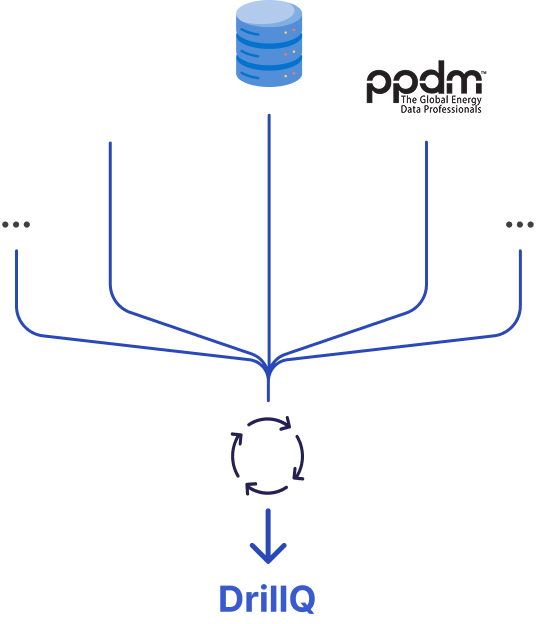
DrillQ connects SQL databases that store structured drilling, asset, equipment, cost, and operational records. It maps those records into the wider DrillQ data model so teams can combine database-backed information with reports, realtime data, planning context, and analytics workflows. Existing databases remain valuable while becoming easier to search, compare, and use in day-to-day engineering decisions.
Challenges with SQL Data in Drilling Operations
Enterprise databases often hold valuable drilling data, but that value is limited when records are hard to access or disconnected from operational workflows:
- Important well and asset data is spread across multiple schemas and systems
- Engineering teams depend on manual extracts or specialist database support
- Database records are not always aligned with reports, WITSML data, or planning files
- Historical tables can be difficult to search by well, project, activity, or section
- Data quality issues are hard to detect before analytics and reporting work begins
How DrillQ Integrates SQL Databases
DrillQ connects structured databases and maps their records into a consistent drilling data layer.
- Connect database sources
Link SQL-backed operational, engineering, asset, and historical data stores.
- Map schema to well context
Translate tables, keys, units, and relationships into DrillQ entities such as wells, assets, operations, and events.
- Use structured records across workflows
Make database records available for reporting, benchmarking, analytics, and operational review.
Key Capabilities for SQL Database Integration
- Secure connection to structured enterprise data sources
- Schema mapping for well, asset, operation, and project records
- Data quality checks and normalization for analytics readiness
- Queryable operational context across DrillQ modules
See It In Action
Historical data enrichment
Combine legacy well records, equipment tables, and operational history with current drilling workflows.
Enterprise data access
Expose trusted database records to engineering teams without forcing manual exports or spreadsheet handoffs.
Analytics-ready datasets
Prepare structured tables for benchmarking, reporting, modelling, and performance review.