WITSML Data Integration for Drilling Operations
Bring realtime and historical wellsite data into one engineering gateway
From Wellsite Streams to Connected Insight
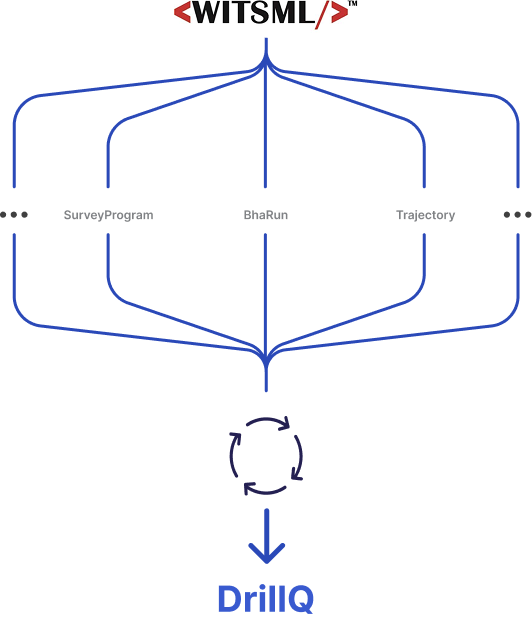
DrillQ connects WITSML streams and files so drilling teams can use realtime and historical wellsite data alongside reports, plans, logs, and operational records. By aligning high-frequency sensor data with well context, DrillQ makes it easier to monitor operations, investigate performance, and understand what happened across each section of the well.
Challenges with WITSML Data
WITSML is critical for drilling visibility, but it is often difficult to use when streams, files, and context are separated:
- Realtime streams and historical files are stored in separate systems
- Sensor data can be difficult to align with activities, reports, and depth context
- Access to WITSML data may be limited to specialist tools or teams
- Data quality, units, and channel naming can vary across rigs and vendors
- High-frequency data is not always connected to analytics and reporting workflows
How DrillQ Integrates WITSML Data
DrillQ transforms WITSML streams and files into accessible, contextual data for monitoring and analysis.
- Connect WITSML sources
Ingest realtime streams and historical files from WITSML servers and wellsite systems.
- Normalize channels and context
Map curves, units, timestamps, depth references, and well identifiers into a consistent structure.
- Use data across workflows
Make WITSML data available for Realtime monitoring, Analyzer modelling, and Explorer benchmarking.
Key Capabilities for WITSML Integration
- Realtime and historical WITSML ingestion
- Time, depth, and activity alignment
- Channel normalization and data quality checks
- Integration with monitoring, analytics, and benchmarking modules
See It In Action
Realtime monitoring
Stream wellsite data into DrillQ so teams can track drilling conditions and operational changes as they happen.
Historical time-series analysis
Use stored WITSML data to investigate trends, compare offsets, and support performance modelling.
Event correlation
Align rig sensor data with reports, activities, and engineering context to understand cause and effect.