Well Planning Suites Integration for Drilling Data
Connect well plan suites, trajectories, BHAs, and engineering designs to operational workflows
From Planning Files to Operational Context
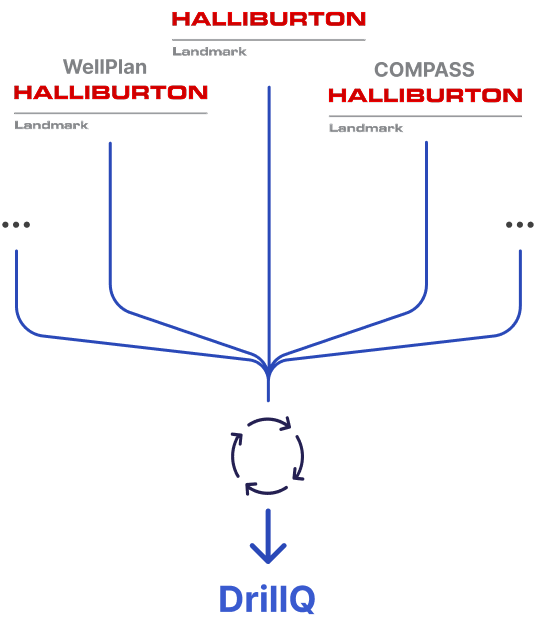
DrillQ connects well planning suites and engineering design outputs into a unified drilling data environment. It helps teams preserve the relationship between planned trajectories, BHAs, casing designs, hazards, assumptions, and the operational results that follow. Instead of keeping planning context isolated from execution data, DrillQ makes it available across reporting, benchmarking, analytics, and realtime workflows.
Challenges with Well Planning Data
Planning data often sits apart from execution data, making it difficult to learn from previous wells and keep future plans grounded in operational evidence:
- Plans, trajectories, and design files are stored in separate engineering tools
- Plan assumptions are hard to compare with actual execution outcomes
- Offset-well lessons are not consistently carried into new programs
- Planning context can be lost during handover between office and field teams
- Historical design decisions are difficult to search and reuse across campaigns
How DrillQ Integrates Well Planning Suites
DrillQ connects planning outputs to the wider operational data model so teams can compare, analyze, and improve every well program.
- Connect planning sources
Import trajectories, well plans, BHA details, casing programs, and engineering assumptions from planning workflows.
- Map design context to wells
Attach plan data to the correct asset, project, section, and operational timeline.
- Use planning data across DrillQ
Make plan context available for benchmarking, analytics, reporting, and plan-versus-actual review.
Key Capabilities for Well Planning Integration
- Unified access to planned and actual well context
- Trajectory, BHA, casing, and section-level data mapping
- Offset-well comparison for better planning assumptions
- Integration with Explorer, Manager, and Analyzer workflows
See It In Action
Plan versus actual review
Compare planned trajectories, section objectives, and drilling assumptions against actual well execution to understand what changed and why.
Offset-informed planning
Use historical wells and campaign performance to strengthen planning assumptions before the next well is executed.
Engineering handover
Keep plans, design constraints, and operational context accessible to drilling, operations, and analytics teams.